
Diana Shipping announces time charter contract for m/v Houston with Koch
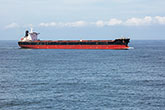
The Houston is a 177 729 DWT capesize dry bulk vessel built in 2009.

The Houston is a 177 729 DWT capesize dry bulk vessel built in 2009.

The Japanese ship classification society has released the latest version of its design support software PrimeShip-HULL (HCSR) Ver.6.0.0.
The latest amendment to the International Maritime Solid Bulk Cargoes Code entered into force on 1 January 2019 and includes important updates related to cargoes that may liquefy.

The MACS3 bulk carrier version provides functionalities required to load and unload varying solid bulk cargoes with consideration for hatch cover handling and safe transport of cargo.

Navios Maritime Holdings Inc. shares the company’s financial results for the fourth quarter and year ended 31 December 2018.

Wood Mackenzie experts have provided commentaries on China's Dalian port and its restriction on coal imports.

Algoma Central Corp.’s Algoma Conveyor, the third Seawaymax Equinox Class 740’ self-unloading dry bulk carrier, began its delivery voyage from China to Canada.

Grieg Star commences the recycling process of its Star Gran vessel under new EU recycling regulations.

From the end of 2020 onwards, the EU-Ship Recycling Regulation requires that all EU-visiting or EU-flagged ships have a certified Inventory of Hazardous Materials on board.

COSCO Shipping Lines and Bolloré Transport & Logistics have signed a strategic Memorandum of Understanding to develop new synergies.
Wilhelmsen Ships Service and Hitachi enter into a supply agreement, which will see Wilhelmsen supply Hitachi High-Tech analysers to the maritime market, enabling vessel crews to accurately and efficiently test the sulfur content of their fuels.

Star Bulk Carriers Corp. has purchased 95 605 of its own common shares.

Diana Shipping Inc. enters into two Memoranda of Agreement to sell two of its panamax vessels, the m/v Danae and m/v Dione.

The Lucky Bay project, a terminal for grain storage and export, is located on the Eyre peninsula in South Australia.
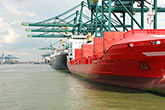
One of the key changes is the formalising of the 15-knot speed reduction in the First Narrows, which was previously voluntary.