
Editorial comment
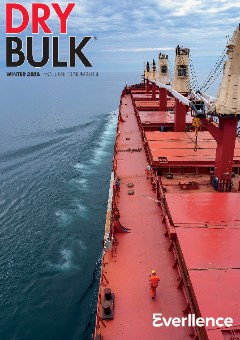
Welcome to the Winter edition of Dry Bulk. I hope the festive spirit is starting to reach you Ð because I must admit, it hasn’t quite reached me yet. When deciding what to write in the comment for this edition, if I’m honest, I’ve struggled to know where to begin.
Register for free »
Get started now for absolutely FREE, no credit card required.
Perhaps it’s because the backdrop for the industry feels so uncertain. As UNCTAD notes, global shipping is “under immense pressure”, with trade growth stalling and freight rates defining a “new normal” of volatility. For dry bulk, the story is similar, with weak demand and earnings down around 25% in the first half of the year. What’s interesting, however, is where the counter-strategy is emerging.
Against this backdrop, it’s tempting to look for grand, global solutions. Yet the most meaningful action is happening much closer to home, with major infrastructure projects reshaping the ports and regions that keep the dry bulk sector on its two feet.
As a Brit, why not begin with Wales. This month brings a major boost for Wales’ maritime economy, as Associated British Ports confirms a £42 million investment that forms the first stage of its £137 million capital programme for South Wales. The announcement marks one of the most significant commitments to Welsh port infrastructure in decades, securing the long-term future of ABP’s five South Wales ports and positioning the region to handle larger vessels.
And Wales, of course, isn’t the only part of the UK making waves. Across the border, Liverpool is also pushing ahead with major expansion, reinforcing its ambition to become a global steel hub. Peel Ports’ record-breaking 702 000 t of bulk steel handled in 2024 (sourced from South Korea to Turkey) is a major milestone. But it’s the owned infrastructure behind that success that tells the real story: a new £2 million deepwater bulk berth and 200 000 ft² of storage space positioning Liverpool as a serious player for steel and wider bulk commodities.
What’s more, the UK isn’t alone in this trend. Around the world, ports are scaling up, deepening berths, and racing to accommodate larger vessels and heavier cargo demand. AD Ports’ new dredging agreement in Karachi, Pakistan, which will double bulk vessel capability to 120 000 t, mirrors the same global momentum we’re seeing in Newport and Liverpool.
Whether it’s Pakistan, Wales, or Merseyside, the pattern is unmistakable. In a year where the dry bulk market faces undeniable headwinds, the strategic response is a wave of investment in the assets companies own and operate directly. This shift towards stronger and more resilient port operations is fast becoming one of the defining themes of 2025.
To hear more about how the global dry bulk industry is responding to the current climate, dive into this fantastic issue, packed with brilliant editorial content. This edition explores a wide range of topics, including freight market updates, conveying, digitalisation, automation, emissions control and decarbonisation, silos, and more. Enjoy.
